Deciphering mining shifts, swings and rosters

Trying to understand industry lingo can be hard enough if you’ve never worked FIFO before, and then there’s the number combinations - two and one, two and two, even-time… We’ve broken down everything for you, so you can get into the industry knowing exactly what’s what.
Common terms
A shift is your working block within a 24 hour period. In mining, the typical working hours for one shift is around 12 to 12.5 hours, including paid/unpaid breaks.
There are two daily crews covering operations, one on day shift and the other on night shift. Day shift commonly starts between 5am-6am, with a pre-start meeting before the actual work begins. The night shift crew will usually begin work at the 4pm-6pm equivalent time, with a half hour overlapping “handover” for senior roles.
A swing is your on-site working block, made up of a certain number of shifts, e.g. 8 or 14 shifts. This is then followed by an R&R period - rest and relaxation, also sometimes known as an “off swing”, usually for 1-2 weeks, depending on your roster.
Rosters are defined by the on/working time, followed by time off/R&R. They can be written in weeks, or broken down into day/night shifts.
Most large sites will run 4 different crews (A, B, C, D) to cover continuous 24 hour operations. At any given time, one crew is on days, one crew is on nights, and the others are on R&R. Each crew rotates to the next position on the roster block each week.
Due to health and safety, most operations do not allow you to work more than 14 consecutive shifts, or more than 7 night shifts in a row. A fatigue day may be mandatory to break up work time, and whether you are paid or not depends on your contract. Shift change/pyjama day/changeover day is the day spent at camp when switching from day shift to night shift. This means you finish your last day shift in the evening, then have the next 24 hours off, and begin night shift the next evening.
Different types of mining swings and rosters
Rosters can vary greatly, but we’ve included the most common here to help give you an idea of what’s available. (Example flight days are Wednesday, but it could be any day of the week) It can all feel a little confusing at first - especially when you’re trying to line up different rosters with your mates in other mining jobs - but you’ll soon wrap your head around it all.
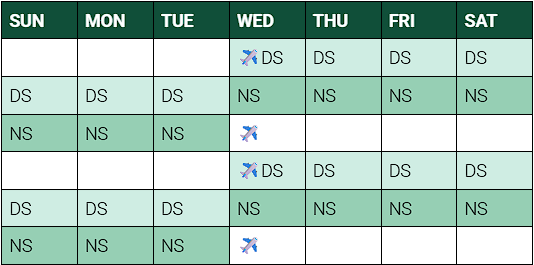
2 weeks on, 1 week off (2:1)
Pros:
+ Higher on-site time ratio = higher total earnings
+ Suits shutdowns where continuity matters
+ Good momentum for training and learning plans, procedures, etc.
+ Common pattern, easier to find matching roles for couples/friends
Cons:
- Less time at home = miss out on recovery, socialising and events
- Fatigue load - 14 straight 12 hour shifts is demanding
- Travel squeeze - flights can east into your one week off
- You’ll land on more public holidays on-site across the year
Who it suits:
• People chasing income and rapid experience
• Those comfortable with long blocks and tight turnarounds
• Singles/new starters keen to “bank hours” and build skills fast
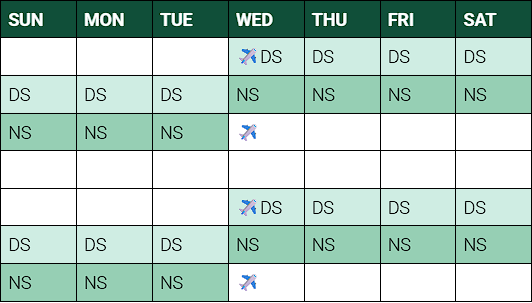
2 weeks on, 2 weeks off (2:2)
Pros:
+ More time off = real reset and recovery time, plus more time for family and socialising
+ More sustainable long term, lower burnout risk, and easier sleep recovery after nights
+ Flexibility for more life admin, appointments, and contributing to the home
+ Travel and delays don’t wipe out your entire break
Cons:
- Lower annual earnings in comparison to 2:1 roster
- Progression can feel slower
- Some sites offer less overtime on even-time rosters
- High competition as it’s a very popular roster
Who it suits:
• People prioritising family time, health, and longevity in FIFO
• Experienced workers who value balance over maximum days onsite

1 week on, 1 week off (8:6/7:7)
Pros:
+ Even time balance means regular, predictable home time and recovery
+ Only one week of 12 hour shifts, means less cumulative fatigue than longer blocks
+ Momentum without burnout - enough days on to stay sharp, then a week’s reset
+ Leave stretches well - a week’s leave creates an extended 3 week break
Cons:
- More travel churn with twice as many changeovers vs longer rosters, and potential delays affecting your time off more
- First days off on R&R can vanish due to recovery, especially after night shift
- Frequent body clock flips and switching between nights once per month can have real physical and mental health effects
Who it suits:
• Families/couples desiring regular home presence and life routines
• Those who don’t love long swings and can manage circadian flips with good sleep hygiene
• Experienced workers who can hit the ground running each swing
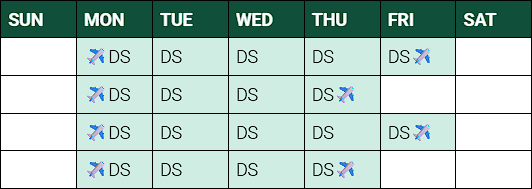
Monday to Friday, 9 day fortnight (5:2/4:3)
Pros:
+ Family-friendly, home every night, with every second 3-day weekend
+ Easier on the body clock, no night shifts, and little to no circadian disruption
+ Steady hours and skill development
+ Frequent contact with all other staff and crew, good for professional development and building relationships
Cons:
- May be unpredictable if switching between DIDO/BIBO and FIFO days/weeks
- FIFO travel time can quickly add up, and any delays greatly affect personal time
- Lower R&R ratio
Who it suits:
• Local/residential workers wanting routine and evenings at home
• FIFO close to hub airports (short flights/drive-ins) who value frequent home touchpoints more than long breaks
A roster’s real value is not just what it pays, but also time with the ones you love, and a healthy body and mind.