Merino, bamboo, blisters? The perfect sock showdown.
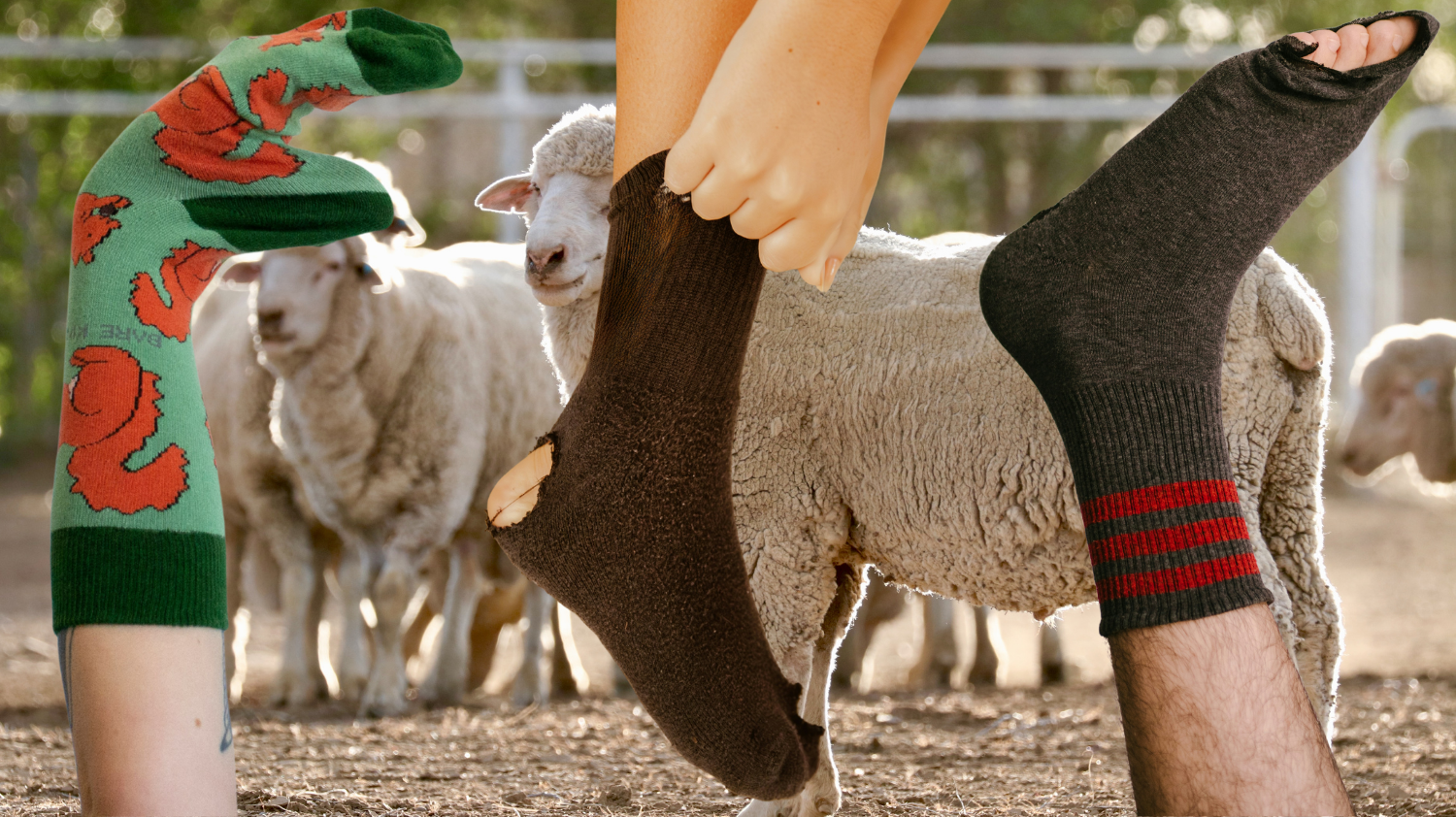
Who'd have thought we'd spend this much time looking into the perfect socks? Yet, here we are - because after 12+ hours in steel caps, the wrong pair can turn legends into hobblers. After falling down a rabbit hole, we thought this info would make a great post, breaking down the great sock debate. Merino vs synthetic vs bamboo, plus cushion, seams, and blister-proof tricks. It's not glamorous, but neither is a heel full of weeping spots. Let us help save your feet, so you can save your energy for the work (and the gym... or at least the mess dessert bar).
🤔 What matters most
• Moisture management: dries fast, wicks sweat away from skin
• Friction control: smooth knit, good fit, minimal seams to prevent hotspots
• Durability: reinforced heel/toe that won’t blow out under steel caps
• Fit and recovery: a bit of stretch so the sock doesn’t bag out during a 12-hour shift
🐏 Materials pros and cons
Merino wool blends (merino + nylon/nylon + a little elastane) (⭐ Top pick)
Pros: excellent moisture management, regulates temperature (cool in heat, warm when wet), naturally odour-resistant, comfy all day.
Cons: needs nylon reinforcement for durability; pure merino can wear through.
Look for: ~40-70% merino, 25-55% nylon/poly, 2-6% elastane; seamless toe; crew length.
Technical synthetics (polyester/Coolmax®, nylon, polypropylene) (☀️ Great in heat/sweat)
Pros: fastest drying, very durable, inexpensive, good for people who soak socks.
Cons: can get smellier than merino; choose treated yarns or rotate pairs.
Look for: ventilated panels, reinforced toe/heel, snug arch wrap.
Bamboo/“bamboo viscose” (⚠️ Mixed)
Pros: soft hand-feel, can feel cool initially.
Cons: viscose absorbs and holds moisture, dries slow, and tends to sag/pill; abrasion resistance is weaker = holes under steel caps; “antibacterial” claims fade after washes.
Verdict: comfy for office/camp; not ideal for heavy duty shifts unless blended heavily with nylon/poly and kept as a liner/spare.
Cotton (❌ Avoid for site)
Holds moisture, dries slowly, increases friction = blisters. Keep for camp only.
🧦 Double-layer/liner systems (e.g., thin poly/merino liner + outer sock)
An inner layer is added, moving against the outer, reducing skin friction. This is a good potential solution for blister-prone people. The fit is a little fussier, and not everyone likes the feel. It's also warmer, and the shoe fit must allow for extra thickness.
🪡 Construction details to consider
• Light to medium cushion under forefoot/heel is the sweet spot. Too thin = pressure; too thick = heat/sweat.
• Crew height or higher to protect the ankle from collar rub and keep grit out.
• Light compression can reduce foot fatigue and swelling on long shifts.
• Seamless (or flat) toe to prevent rubbing.
• Reinforced toe/heel (often high-denier nylon) for steel-cap wear.
• Arch band to stop slip and bunching.
• Vented zones on top of foot for heat.
🥾 Simple picks by scenario
• Hot, sweaty sites (Pilbara summer): lightweight merino/nylon crew or Coolmax®/nylon crew.
• Blister-prone: thin synthetic liner + medium-cushion merino blend outer; consider toe socks as liner if between-toe hotspots.
• Wet/rainy: synthetic dominant (poly/nylon) for fastest dry time.
• Odour-averse: merino-rich blend.
👣 Care and rotation (huge for comfort)
• Pack at least 6 to 8 pairs for a 2/1 swing (change at smoko if you soak through).
• No fabric softener (it kills wicking).
• Turn inside-out to wash; air-dry fully to protect elastane.
• Foot care: trim nails, use anti-friction balm or powder on hotspots, and let boots dry between shifts (remove insoles).
🛍️ Brand examples
• Merino blends: Darn Tough, Smartwool, Icebreaker, Wilderness Wear
• Technical synthetics: Wigwam, Thorlo, FOX RIVER, Wrightsock
• Toe socks/liners: Injinji, Bridgedale
For heavy-duty mining work, merino-nylon crew socks (light to mid cushion) are the most universally dependable. Technical synthetic socks are a great hot-weather or budget alternative. Skip cotton, and treat bamboo viscose as comfort/lounge wear rather than your primary work sock unless it’s a tough blended knit and your feet run dry.

![Mining and Resources Australia Complete Guidebook [Pre-order]](https://images.squarespace-cdn.com/content/v1/648323d35bdc9b0f3ffaea04/f7790d09-b253-410e-9e66-2b6d141879a3/MARA+Guidebook+-+store+%2811%29.png)